

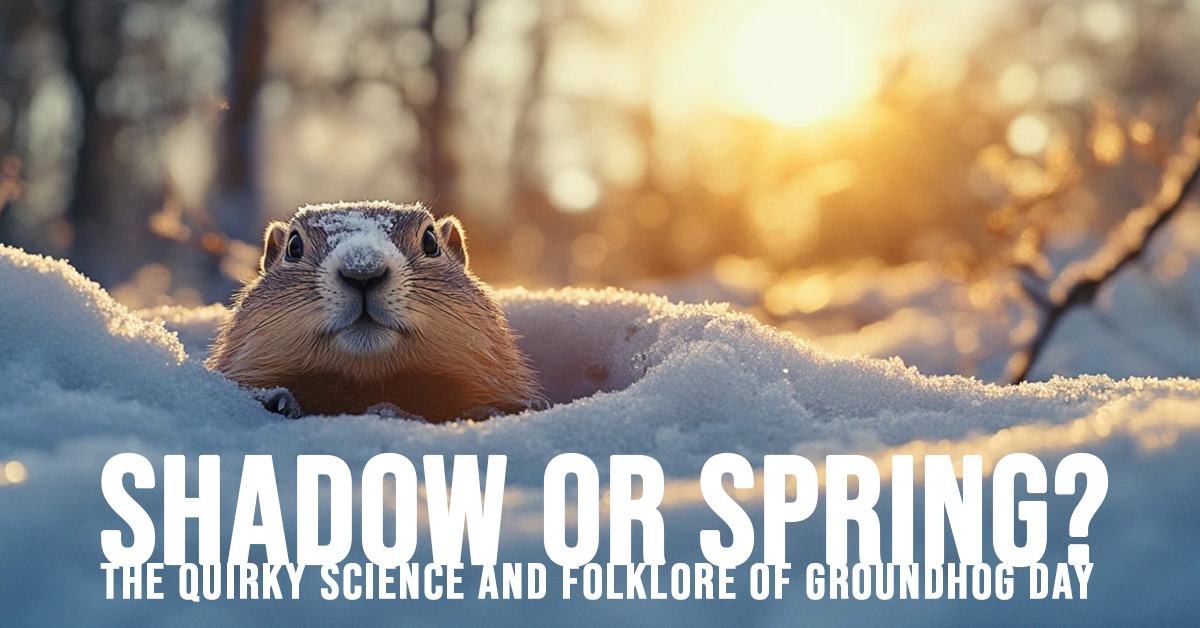
Shadow or Spring? The Quirky Science and Folklore of Groundhog Day 2026
On Monday, February 2, 2026, the eyes of the nation (and several confused meteorologists) will turn to a small hill in Pennsylvania. Groundhog Day is perhaps America’s strangest holiday—a day where a rodent’s reaction to sunlight supposedly dictates the national energy budget for the next six weeks.
But where did this tradition come from, and is there any actual science behind Phil’s predictions?
- From Badgers to Groundhogs
The tradition actually has roots in the Christian holiday of Candlemas. An old English song said: “If Candlemas be fair and bright, Come, Winter, have another flight; If Candlemas brings clouds and rain, Go Winter, and come not again.”
German settlers in Pennsylvania brought their own version, which involved a badger. Finding no badgers in the American Northeast, they “recruited” the plentiful groundhog (or woodchuck). In 1887, the first official Groundhog Day was held at Gobbler’s Knob.
- The Accuracy (Or Lack Thereof)
According to the NOAA, Punxsutawney Phil has been right about 40% of the time over the last ten years. In other words, you’d be better off flipping a coin. However, the holiday isn’t really about the weather—it’s about the mid-winter “pause.” In the deep chill of early February, the idea that spring might be just six weeks away provides a vital psychological boost.
Whether Phil sees his shadow or not this Monday, Groundhog Day remains a charming reminder that even in our high-tech 2026 world, we still enjoy a little bit of folklore to help us through the winter.